
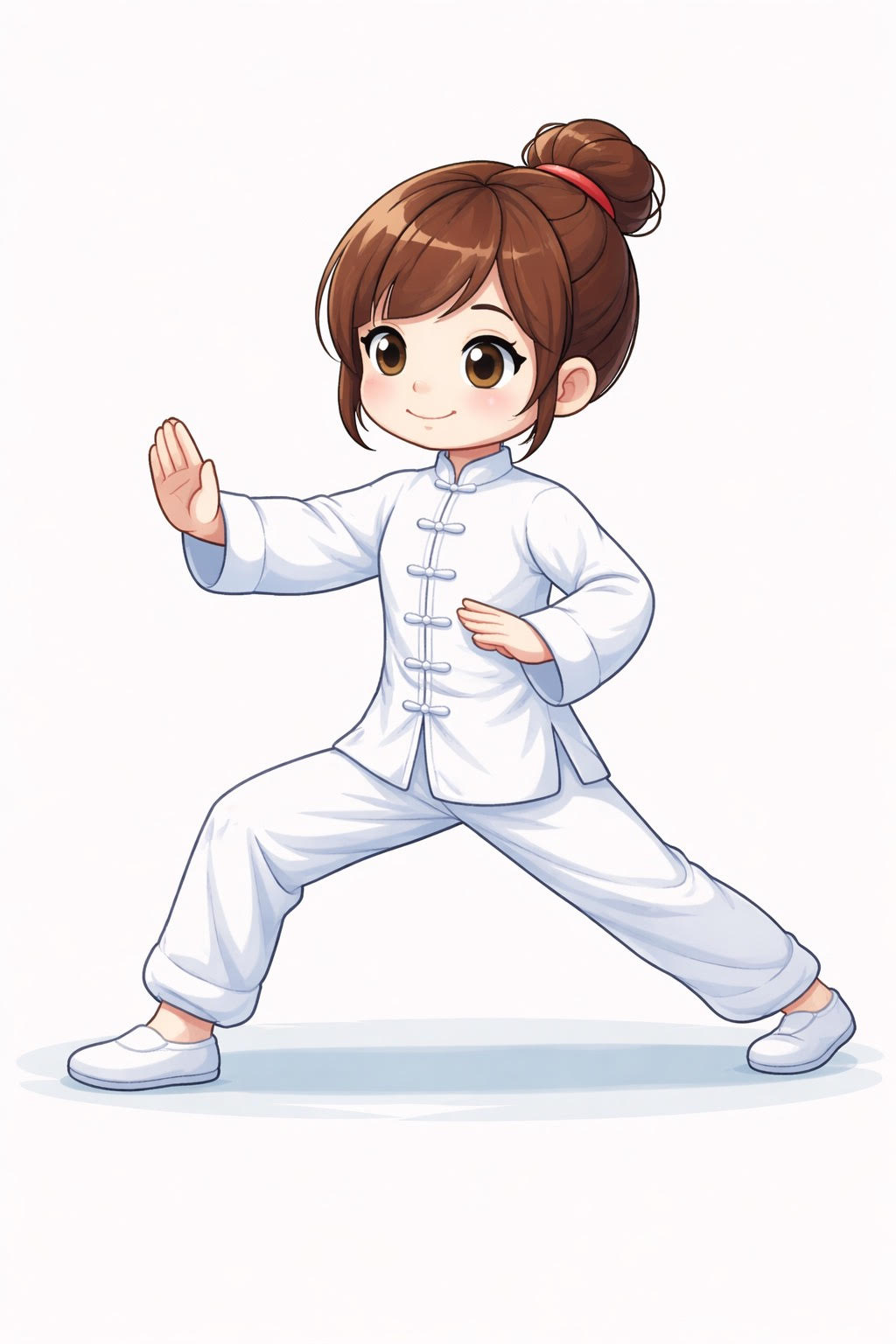
The Most Important Foundational Skill in Tai Chi Practice
Tai chi walking is no doubt the most important foundational skill in all tai chi learning. Every posture, every transition, and every expression of internal power depends on how we step, shift, and turn. Yet even after years of practice, mistakes in walking mechanics are common among practitioners.
Some practitioners prefer traditional routines and dislike contemporary standardized forms. Others question traditional methods and favor modern standards. Since preference is personal, I will not argue about taste. Instead, I would like to offer a practical, research-informed perspective—especially for beginners who are building their foundation.
As an engineer, I value standards. Standards do not eliminate tradition; they help ensure quality, consistency, and safety on a broader scale. Tai chi walking is no exception.
Two Traditional Methods of Tai Chi Turning
Within the traditional transmission of Tai Chi (Taijiquan), especially in the lineage of Yang Luchan, two distinct methods of turning while walking have been preserved:
1. Pivoting on the Supporting (Weighted) Leg
In this method, the practitioner turns while the majority of body weight remains on the supporting leg. The rotation happens through coordinated spiral force from the kua (hip joint), knee alignment, and ankle mobility.
Advantages:
- Maintains continuous rooted connection.
- Encourages strong leg conditioning.
- Develops advanced control of spiral force (chan si jin-like mechanics).
Risks for Beginners:
- If alignment is incorrect, torsional stress on the knee can occur.
- Requires refined hip-knee-ankle coordination.
- Demands good proprioception and structural awareness.
Experienced practitioners can execute this safely and elegantly. However, it is technically demanding.
2. Shifting Weight Back Before Turning
In this approach, before turning, the practitioner transfers weight backward, reducing load on the turning leg. The turn then occurs on the leg that does not carry the majority of body weight.
This is the method widely adopted in modern standardized routines promoted by Chinese sports authorities and many descendants of the Yang family lineage.
Notably, standardized Yang-style developments associated with masters such as Yang Chengfu and later formalized through modern teaching systems have emphasized clarity, safety, and accessibility.
Why this method is less tricky for beginners:
- Reduces rotational stress on the knee joint.
- Makes weight transfer more obvious and measurable.
- Encourages clearer distinction between “full” and “empty.”
- Easier to maintain vertical alignment of the spine.
- Promotes safer neuromuscular learning patterns.
Biomechanics research consistently shows that knee torque increases when rotational forces occur under heavy load. Reducing weight before pivoting lowers shear stress on the joint. For beginners still developing hip mobility and structural awareness, this matters.
Experts can do either method without harm. But for most beginners, the second method provides a safer entry point.
Tradition vs. Standards — A Matter of Preference
Some people do not like standardized forms. That is perfectly fine. Preference is personal.
However, beginners often face a challenge:
How do you verify whether your method is correct?
Traditional teaching can sometimes rely on personal transmission—subtle corrections given through hands-on experience. While valuable, such access is not always available to everyone.
Standardized routines—such as the 24-form simplified Yang style widely promoted in China—were created to:
- Improve public health access
- Provide consistent teaching frameworks
- Reduce injury risk
- Preserve core principles in structured form
From an engineering perspective, standards help improve quality across a wide population. They do not replace depth; they create a stable foundation.
That said, standards are not “easy.” Walking correctly within standardized tai chi still requires serious effort, awareness, and disciplined repetition.
The Five Key Steps in Tai Chi Walking
Based on classical principles and modern biomechanical understanding, here are five essential steps:
1. Shift weight back
2. Turn the body
3. Shift weight forward
4. Step out the heel
5. Settle the weight
Scientific and Health Benefits of Tai Chi Walking
Extensive research over the past decades supports the health value of tai chi practice. Since walking is its foundation, these benefits are closely tied to walking mechanics:
1. Improved Balance and Fall Prevention
Multiple clinical trials show tai chi reduces fall risk in older adults by improving proprioception and neuromuscular coordination.
2. Enhanced Joint Stability
Slow weight shifting strengthens stabilizing muscles around knees, hips, and ankles.
3. Reduced Knee Stress (When Done Correctly)
Proper alignment and mindful stepping distribute force more evenly than habitual walking patterns.
4. Better Postural Control
Continuous axial alignment improves spinal stability and reduces compensatory tension.
5. Cardiovascular and Metabolic Benefits
Moderate-intensity tai chi practice improves circulation and aerobic capacity.
6. Cognitive Engagement
Because orientation constantly changes, tai chi walking stimulates motor planning, spatial awareness, and attentional control.
7. Mind-Body Integration
The deliberate transition between full and empty refines body awareness and nervous system regulation.
Final Thoughts for Beginners
Tai chi walking is not merely stepping. It is the laboratory where structure, balance, alignment, and internal coordination are built. Master walking, and forms will unfold naturally.
I hope all practitioners—whether traditional or modern—continue refining their walking with patience, curiosity, and serious effort. The path of tai chi is long, but every step matters.
You can find the Tai Chi Club’s forward tai chi walking Tutorial here.
I’m always impressed with how you find tools to aid in your teaching.
Thank you! I’m still exploring and trying to find more ways to illustrate.
This is very helpful, thank you. I am interim joining a class near Oak Hills Subdivision. Will there be a class offered?
The closest one will be hand form class in the Main library
This is very helpful information. I appreciate the time and effort you put into to producing it.
my pleasure! Thank you!